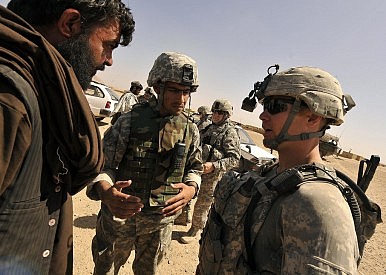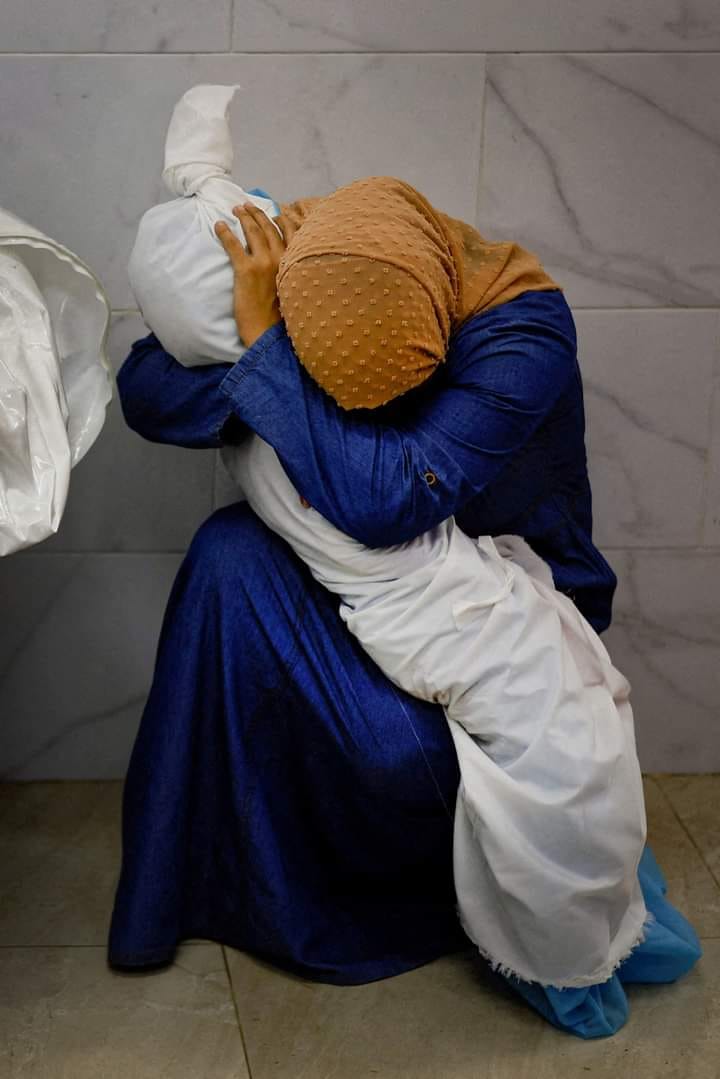

April 15, 2013 Boston, Massachusetts - April 7, 2013 Kunar, Afghanistan Terror has no face; tragedy has no name to the fallen angels and risen souls to whose innocence we’ve lost our humanity in the same week. On the left the youngest victim of the Boston Marathon terrorist attack and on the right the young victims of the hidden side of Operation Enduring Freedom through the precision bombing of one of many NATO air strikes in Kunar, Afghanistan. One Newtown too many and too frequently for a country 1/10th the size of ours.
|
|
|
Half a Millennium of Religious Intolerance in Caucasia and Beyond By Zaman S. Stanizai The turn of recent events have brought Chechnya into the limelight albeit for all the wrong reasons. For those who venture beyond the realm of cultural stereotyping we present an historical analysis of Russia’s policy towards the Northern Caucasus region and beyond. After the Chechen war of independence, Russian granted Chechnya autonomy in 1966. Putin reneged on Moscow’s treaty in 1999, ravaged Chechnya and turned Groznyy, its capital of 450,000 residents, into a ghost town. These atrocities catapulted the ruthless KGB apparatchik to political prominence as the new ‘czar’ in Kremlin.... This five-part analysis gives the reader an opportunity to understand the conflict in Chechnya and the Northern Caucasus region in its historical context. Read more
|
|
|
Beyond the Being: Mystic Spirituality
"Sufism is a journey from the outward to the inward—a journey between transcendence and immanence in which the Sufis become the personification of the ideal condition of fitra—inner and outer harmony."
"Through his supplications, contemplations, meditations, as well as his lyrical yearnings for the Divine love Rumi weaves the weft of mysticism from the woof of Qur’anic fiber turning it into a woolen cloak that mantles the pious and the pure."
|
Like A Rainbow Islamic spirituality consists of both exoteric and esoteric dimensions. Within esoteric Islam, Sufism is a journey from the outward to the inward—a journey between transcendence and immanence in which the Sufis become the personification of the ideal condition of fitra—inner and outer harmony. This harmony is sought through knowledge and practices common to many spiritual traditions. Sufism, like its religious tradition Islam, shares its universalism with Christianity through similarities in contradistinction. Christianity anthropomorphically applies human characteristics to god while Islam and Sufism elevate humanity theomorphically to reach God by means of acquiring the essence of God’s attributes. Through a potentiality of ascension, Sufism become like Zen Buddhism in that it strives to attain spiritual union with the Beloved through hal, a state much like nirvana. While the essence of Zen is in the being, Sufism’s essence is in the tension between the being and the becoming—the Sufis cease to “be,” in order to “become.” Read more
|
In the Cosmic Whirl of a Lotus The poetry of Mawlana Jalaluddin Muhammad Balkhi Rumi is a treatise on interactive Divine love that nurtures spiritual stirrings in the depth of the human heart. Rumi employs the poetic vernacular to the optimum in his search to find a blueprint for the path to perfection. Through his supplications, contemplations, meditations, as well as his lyrical yearnings for the Divine love Rumi weaves the weft of mysticism from the woof of Qur’anic fiber turning it into a woolen cloak that mantles the pious and the pure. Rumi’s magnum opus, Mathnawi-i Ma’nawi or the Spiritual Couplets begins with a calling of the reed flute as a longing to rejoin its original source in eternity. In the suspense between reason and rhyme Rumi clarifies the mythical to the ascetic and the aesthetic to the mystified. Read more
|
On the Occasion of Rumi’s Spiritual Reunion with the Divine The Veiling of the Revealed in the Darkest Night of Light We often celebrate time as an instance that rises to the occasion of an opportune moment in which we connect with other, with the other, with none other, but the Divine in the universal unconscious. In that connectivity with the other we lose ourselves, our self and self-centeredness. Thus, it is in the loss of the self that we belong to the world and not the other way around—we find the truth of our triviality in the totality of the incomprehensible universe. That realization is instanced in the mirror of time as the celebration of a new beginning in a higher realm of awareness. Read more
|
The Steps of Ghazal: On the Meaning of Meaning: Re-rhyming Rumi Rumi’s timeless poetry stirs in the spirit those who don’t turn in the body in search of the divine within. In Islam’s rich literary tradition the Sufis have carved a niche of their own. Because of the powerful pull of this tradition, many poets have eventually become Sufis whereas Rumi was a Sufi who eventually became a poet. Read more
|
|
|
"We find the truth of our triviality in the totality of the incomprehensible universe. That realization is instanced in the mirror of time as the celebration of a new beginning in a higher realm of awareness."
|
Spiritual Sufi Poetry presents poetic expressions reflected in transcended reality with re-versed rendered translations reflecting the thoughts of great Sufi sages of the past and their mystic inspirations whose presence I have personally experienced. To peruse an offering of the numinous in prose and poem. Click here.
|
Here is a sampling of
Spiritual Poetry. Click on each title for viewing.
|
|
|
Celebrating Rumi Pacifica Institute December 17, 2011
|
History is not a mere glance in the rearview mirror, but a vision reflecting on the past and demanding of us to project on the untraveled road ahead. This perspective is the thread that runs through the theme of the three audio lectures presented here. By identifying with the parallels of events and taking the right turns at junctures, history doesn’t have to repeat itself as the ghost of past miseries. Read more
|
Video Presentations
Unearthing the Literary Treasures of Islamic
Mysticism is a poetic sampling
of literary treasures in Islamic Mysticism that explains certain principles in
Sufism covering such concepts as Spiritual Poetry, Islamic Mysticism, Rumi, Ibn
Arabi, Hallaj, Hafiz, Baydil, Rahman Baba, and Islamic thought.
Islam Between Conformity and Modernity considers the need for an Islamic reform in which
Muslims define themselves through owning modernity and covers topics such as modernity,
Westernization, regional marginalization, dominant culture, Islam and science,
religious diversity, tolerance, systemic obsolescence, authentic hadith,
Wahabism, cultural suppression, and self-imposed alienation among others.
Hidden Realities of Mi’raj, ‘Ascension’ is a modern perspective on the Prophet’s Ascension narrative
through an analysis of the perception of the realms of reality. In that context, this talk addresses the
metaphysical, the realms of reality, the human and the interactive divine, a
brief review of Ascension literature, politicized perspectives, and thematic
classification of the Qur’an. Robbing the Arab Spring of Political Legitimacy The latest wave of technological advancement raised hopes that the Arab street would finally be able to bypass the dictates of the un-authoritative and venture into the open spaces of popular democracy. The expectation was that popular networking media would empower the disenfranchised enabling the grassroots to evolve into a viable democratic system. When the rumbling roar of revolutions signaled a region-wide power-shift, the West declared Arab dictatorships too indispensible to fail. The ‘holy cow’ of democracy was gored by the empire that struck back with vengeance rendering the revolutions irrelevant and their legitimacy heisted. click here to see the video presentations
|
Public
Lectures
From
the public lecture series the following are available with MP3 audio for your
listening pleasure. Some lectures notes and slides in PDF format are also
available for your perusal. Some of these topics have also been
addressed in Pashto or Dari Persian languages for Global television
audience that are available in the Pashto/Dari website Indigo Firmament at Stanizai.com.
Visit the Cultural Confluence section under the
menu or click simply click here and scroll to the MP3 icon of the specific lecture:
- Islam
Between Conformity and Modernity
- Identifying
with Layers of Islamic Identity
- Islam
and Science: Debunking the Myth of Incompatibility
- Revisiting
Pivotal Junctures in Islamic History
- Can
We Know God: A Phenomenological Approach to Understanding
- Crisis
of Critical Thought in Muslim Societies:The Bidding of Bid’a
|
|
|
Articles/Reports in this Section have been published by the Middle East Institute in Washington, D.C.
Former Taliban fighters hand in weapons.
|
By Zaman Stanizai | Professor of Islamic Traditions - Pacifica Graduate Institute | DEC 16, 2009The Middle East Institute Policy Brief No. 27 December 2009
When social order is politically disturbed in a society like Afghanistan, inter- and intra-group dynamics set forces in motion that cannot be harnessed once unleashed. While group dynamics dictate, for instance, that majorities behave as an integrative and cohesive force as their sense of loyalty lies in the wellbeing of the collective whole, a minority’s interests may on occasion diverge in the pursuit of greener pastures across the fence, allowing themselves to be used as vulnerable pawns by others. Read more
By Zaman Stanizai | AUG 27, 2012 The “new and improved” tactics of “divide and conquer” are operational both at the vertical and horizontal layers of the government and society in Afghanistan. The systemic corruption in Afghanistan is incentivized. It is no secret that numerous top level Afghan government officials from the cabinet level down to the heads of departments are on the payroll of the CIA, receiving supplementary “salaries” and “hospitality expenses” in amounts upwards of $5,000 — 10 to 50 times their official salaries.[1] These officials can also recommend associates, friends, and family members, as recipients of these funds. The unstated objectives are 1) to buy their loyalty by bribing them, 2) to make them dependent on American presence, and 3) to make them vulnerable by detaching them from their popular powerbase as they become socially isolated and objects of public resentment and hatred. Read more
|
|
|
THE HUFFINGTON POST From The Huffington Post World and Culture Blogs:
StanizaiProfessor Mythological Studies at the Pacifica Graduate Institute in Santa Barbara, California
Political science professor at California State University, Dominguez Hills
"True respect for
universal values can be achieved only when we can balance entitlement to the
exercise of our freedoms with respect for the sanctified values of others. When
we cross the bounds of our freedoms, it becomes anarchy; when we expect people
of other cultures to prioritize their values based on our norms, we are
patronizing them subconsciously."
"Flawed is the argument that guns don't
kill, people kill people and gun ownership doesn't contribute to violence. A
recent study by the Harvard Injury Control Research Center concludes that
"Where there are more guns there
is more homicide."
“Whispering
suspicions dictate compliance to assimilative norms persuading even the 'godly'
among us to accept only those who look like us, think like us, and believe like
us. In essence some among us object to God's creative power manifested in the
divergent shades and hues of our humanity.”
“By
'Afghanizing' the conflict before any stability is achieved, the U.S. will be
further empowering the warlords. The rupturing of the ethnic fault
lines will guarantee a very bloody civil war."
"The
candidacy of no other state generated more controversy than that of Turkey.
European leaders portrayed Turkey as a threat to Europe. The French Prime
Minister Jean Marie
Raffarin said, "Do we want the river of Islam to enter the
riverbed of secularism?"
"Instead of
projecting fears of a popular uprising simply because they are theocentric, the
West as the beacon of democracy should side with the people precisely because
Islamist parties are participating in the political process. If we deny them
the opportunity for legitimate political participation in government, they are
more likely to come to power through violence."
|
Provocation or Freedom of ExpressionPosted: 10/03/2012 2:54 pm
"You won't know the love (of God) until and unless the 'you' in you becomes the 'us' in us all." - Rumi Like golden rules there are golden values, principles, and rights that civil societies cherish and hold in high esteem -- regardless of whether we root them in scriptures as the words of God or enshrine them in constitutions as the words of 'man' or attribute other cultural significance to them. Cultures differ in the ways they rank and prioritize their values, but they share many of the same values that include the freedoms of expression and of worship. Read more
Is American Gun Culture Compatible With a Modern Civil Society?Posted: 07/26/2012 12:32 pm
The American gun culture is defined by the highest rate of gun ownership in the world along with a high rate of gun violence. Americans own a whopping 270 million guns. That is 88.8 guns per 100 people. With only 4 percent of the world population, Americans own 42 percent of the entire 644 million guns in the world. India and China with a combined population that is more than seven times that of the U.S. are in distant second and third place with 46 million and 40 million guns respectively. Read more
Walking in a Muslim's Moccasins: A Different Perspective on the Muslim ProtestsPosted: 09/24/2012 2:43 am
"Don't judge any man until you have walked two moons in his moccasins." - Native American Proverb
We must condemn violence unequivocally, but we must also defend people's right to free expression, at home and abroad. We also need to understand that when the rule of law is weak; it is the mob mentality that carries the day. There are many peaceful protests in the Muslim world, but it is the ones that turn violent that get more attention.
NATO's Third Alternative in Afghanistan
Posted: 05/24/2012 9:41 am
The majority of Afghans, Americans, and Europeans believe that it is time for NATO and American troops to leave Afghanistan. This treacherous road had been traveled long enough to know that it leads to nowhere. The decade-long unrestrained military operations have failed to achieve even a modicum of political stability. Instead, they have practically bankrupted the American economy and have devastated the Afghans. Read more Read more Why Is the European Union Haunted by Its Rejection of Turkey?
Posted: 07/09/2012 9:48 am
The shifting winds of the latest Greek and French elections turned the June 2012 European Summit in Brussels into "a defining moment for European integration." Now that the collapse of the euro has been averted through easy-term bank bailouts and an empowered European treasury, it's time to reflect on why Europe got into this mess in the first place. Read more Read more When an Arab Spring Is NeitherPosted: 06/18/2012 5:48 pm
When it comes to religion and politics, the Western mind understandably shifts to a high pitch of anxiety and fear of theocracy. The theocentric Muslim East, on the other hand, has no experience of theocracies and is thus astounded by the West's overreaction to the role of religion in socio-political discourse and perceives Western agenda as anti-Islamic. Misconceptions and projections across this cultural divide have been as true in colonial times as they have become evident in the Arab Spring. Read more
|
|
|
ArticlesBase.com All the articles in this sections have originally been posted in ArticlesBase.com and are available for public use provided credit is given to the author.
Read how our analysis panned out in predicting the outcome of the Libyan Crisis and how much of the arguments are relevant to other uprisings in the Arab Spring like Syria.
"The ideals and core values of America have been seriously challenged if not outright trampled upon in the conflict between the people as the rightful source of political legitimacy and the profit-driven corporations riding the unbridled greed of plutocracy."
"The U.S. military's eagerness to derail any attempt for a peaceful resolution in order to prolong the war gives credence to a once easily dismissed speculation that Bin Laden may have been ‘allowed' to slip away under circumstances where American forces had mastery over land and air."
"If ethnic balance is not achieved in the Afghan armed forces before U.S. withdrawal, the country will plunge into another bloody civil war—much like the previous one that drove the people right into the arms of the Taliban who were the only force that reigned in the warlords in the many fiefdoms of an Afghanistan on the verge of collapse."
"The denial, and at times demonization and vilification, of the identity of the ‘other' as a first sign of intolerance is deeply rooted in European history in particular as it pertains to the Christian-Muslim adversarial competition."
"A quarter of a century of foreign military support to impose and maintain a minority-dominated government on a disenfranchised majority in Afghanistan looks like a failing effort at sandcastle building rather than ‘nation building.’ "
|
How to Win Peace in Afghanistan For Half the Price of War

At the heart of the crisis is our inability to define our objectives in the conflict. We plunged head on into the crisis knowing nothing beyond the initial attainable goal of dislodging the Al-Qaeda, whose numbers have since dwindled to fewer than a hundred according to General Jones, and toppling the Taliban government in Kabul. A reassessment of the situation in Afghanistan is underway as the uncertainty of the upcoming runoff election amidst looming fears of a civil war have spawned jitters over troop deployment levels in Washington. Read more
Silencing the Call of Democracy and Hijacking the Arab Revolution: Hidden Agenda and Secret Alliances Behind the Libyan Crisis When the Arab Spring was in the offing, the view from the Western media's lens of cultural relativism was one of shock and dismay at the Arabs' desire for democracy and their willingness to achieve this lofty ideal by peaceful means. Our intelligence agencies were flabbergasted by their inability to stymie these revolutions, notwithstanding the fact that they had failed once more in predicting them like in critical junctures near the turn of every decade: from the Prague Spring of 1968 to the Soviet invasion of Afghanistan in 1979, from the fall and dissolution of the Soviet Union ten years later to the 9/11 tragedy in 2001, and now the Arab Spring in 2011. Read more Downgrading American Democracy: Is There Any Left for the Rest of Us? The greatest summer attraction of 2011 in Washington has been the qualifying rounds of the re-electability acrobatics played on the stage of political theater advertised as the ‘national' debt default and deficit reduction crisis brought to you by Corporate America. The warning calls about the downgrading of American democracy have been drowned in the hue and cry of the downgraded economy. The prospects that our ideals might be in jeopardy didn't seem to bother any body. Perhaps we should pinch ourselves for a reality check? Read more
Fighting by the Book Failing by Design:The U.S. Military's Inherent Conflict of Interest with Peace in Afghanistan The American military's obsession with wars has turned U.S. economy into a virtual war economy that thrives on sustained perpetual wars. While our political leadership speaks of a drawdown and troop withdrawals, our military leadership always seem to find a way to get us involved in one or another armed conflict. Those engaged and employed by the military industrial complex wouldn't seriously contemplate peace even when the military spending constitutes nearly 60% of our national budget at a time of economic depression. Read more
How We Messed Up a Flourishing Gun-barrel Democracy in Afghanistan Ten Octobers ago the United States invaded Afghanistan to avenge the 2996 victims of the 9/11 attacks. More than 6227 American deaths, 102,361 injuries, 2276 active-duty suicides, and billions of dollars later the report card is one of a dismal failure. Hundreds of thousands of Afghan and Iraqi were killed to establish law and order and protect civil liberties. In the ten years of chaos even the condition of Afghan women, the cause celebre for the invasion, has deteriorated. Read more We Must Wage War on War to Keep the Republic Public As the euphoria of Bin Laden's death dies down, voices are raised to consider the mission accomplished and begin withdrawing troops from Afghanistan. Since the cause has been removed, the effect should cease to exist as well. Yet the recent top-level Pentagon and CIA shake-ups are indicative of a more aggressive military stance in Afghanistan. At the same time there are reports that the Taliban insurgency has grown significantly amid Pentagon claims of "tangible progress." The so-called "total security incidents" were approximately the same in the Oct. 2010-Mar. 2011 period as in the previous one of 2009-2010." Read more Disowning ‘Otherness' in Norway's Nightmare and Europe's Long Past of Cultural Intolerance Europe's New-age counter-culture has manifested itself in strange ways, the vigorous revival of anti-Islamic hatemongering is one of them. An even more dangerous aspect of this development is that it feeds on Islamophobia with the blessings of America's far right conservative crusaders, media moguls, and petty politicians of that same ilk, whose preaching essentially produced Anders Breivik. Thus, the Islamo-fascism that wasn't, crossed path with a Christiano-fascism that is stuck in the dark pages of history. Read more
Afghanistan in the Throes of Nation Building and Military Build-up For a while at least, it seemed as if USS Afghanistan was sinking fast in the militarized quicksand of Central Asia, sending distress signal m’aider, Mayday. On May Day, Captain Obama rushed to the rescue under the veil of darkness, but the “secrecy” of the visit had already been leaked to the Afghan media some five hours before the President’s arrival—a security breach that is symptomatic of the Afghan crisis. Read more
|
|
|
Voices of Peace Guest Commentaries
|
"This Western interest in the liberty of Muslim lands is understandable, and is even welcomed by the liberal Muslims of the Middle East, such as myself. But the same Western concern, in my view, has led to some misinterpretations of the problem. The most common, and the most mistaken, is the argument that the root of the problem is nothing other than Islam itself."
"We cannot remain silent about the vast array of American Christians who support the most repressive and unjust Israeli policies in the name of Holy Land and a Holy God. We charge that you bear grave responsibility for aiding and abetting obvious sin, and if Israel once again sees war, we suggest that you will bear part of the responsibility. Christians are called to be peacemakers (Mt 5:9), but by offering uncritical support of current Israeli policies you are actively inflaming the Middle East toward war."
|
Islam Will Find Its Own Way to Freedom Written by Mustafa Akyol on July 3rd, 2011[Originally published in Public Discourse] Predicting history is always a tough, if not risky, business. Hence to a big question such as “How do you think the Middle East will be a decade from now?”, my answer would normally be, “Well, we will see.” And yet I am tempted to agree with Michael Novak’s “not-so-bold prediction” that we will see a much freer and more democratic Muslim Middle East by the year 2020. Let me explain why. Read more
From David P. Gushee and Glen H. Stassen Dear Christian Brothers and Sisters, Greetings in the name of our Lord Jesus Christ. We write to you about an urgent matter of common concern.
In just a few weeks, unless their plans change dramatically, Palestinian leaders will make a unilateral declaration of a State of Palestine based on the pre-1967 borders and will turn to the United Nations for a vote to recognize their new state. Read more
THE TIMES OF INDIA / Opinion Terrorism is not a Muslim monopoly Swaminathan S Anklesaria Aiyar, TNN | Jul 23, 2006, 12.20AM IST "All Muslims may not be terrorists, but all terrorists are Muslims." This comment , frequently heard after the Mumbai bomb blasts implies that terrorism is a Muslim specialty, if not a monopoly. The facts are very different. First, there is nothing new about terrorism. In 1881, anarchists killed the Russian Tsar Alexander II and 21 bystanders. In 1901, anarchists killed US President McKinley as well as King Humbert I of Italy. Read more
How Islam Can Eliminate the U.S. DebtBy Faheem Younus, Community Colleges of Baltimore County
Despite a bipartisan agreement yesterday, I think of the debt ceiling debacle like you are trying to keep your cholesterol normal despite daily consumption of Big Macs, fried chicken and ice cream. So when your blood work reveals a cholesterol of, say, 271mg/dl, you somehow snooker your doctor into agreeing that the upper limit of normal cholesterol is 300mg/dl instead of 200mg/dl. Over the next few years the cycle gets repeated, and each time you are able to negotiate a higher upper limit for "normal" cholesterol. From an Islamic standpoint, the Big Mac in this case is America's penchant with an interest-based financial system. Neither slashing trillions in spending nor creating a Super Congress would prove beneficial. Unless we address the fundamental issue of interest, raising debt ceilings is just like increasing the upper limit of "normal cholesterol": it doesn't make you healthy. Read more
|
|
|
|
| |
20130101-7245 8K-20130226
|
|
|
|